About •
About Me
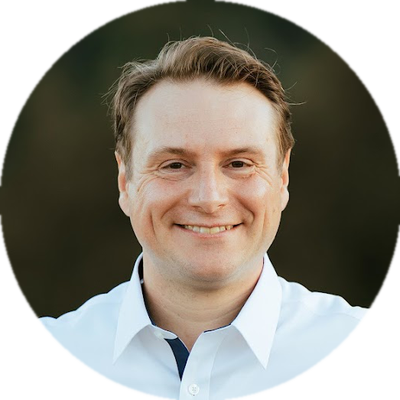
I am a research scientist deploying my background and experience as a physicist to problems in artificial intelligence. My activities focuses on apply the experimental and inferential methodologies we use to make fundamental statements about nature to modern AI architectures.
Research Background
My research career began in particle and nuclear physics, first at Columbia University and later leading a team at Lawrence Livermore National Laboratory. Most of my experimental work was conducted at the Large Hadron Collider (LHC) at CERN, where I worked within large international collaborations, providing the vision and coordination necessary to execute groundbreaking measurements.
My most impactful contribution was leading the observation of centrality-dependent dijet asymmetry—the first measurement in heavy-ion collisions using fully reconstructed jets. This pioneering work, ushered in the LHC era of heavy-ion physics and established a new pillar in our understanding of the quark-gluon plasma.
Current Focus: Physics Meets AI
Having checked off most of my bucket list in experimental physics, I am now eager to apply these analytical abilities and leadership experience to new domains, especially at the interface between technology and humanity. I’ve found fascinating connections between the mathematical frameworks that describe physical systems and those underlying artificial intelligence.
My current research explores what I call the transformer-spin correspondence, the remarkable similarity between transformer neural networks and spin glass systems from statistical physics. This perspective opens new avenues for understanding why large language models work so effectively and suggests physics-inspired approaches for improving AI architectures.
I am actively seeking collaborations and opportunities to apply physics insights to AI research. Please feel free to reach out if you’re working on related problems or would like to discuss potential partnerships.